
Dealing with Politics in Design
Have you ever worked at a company where getting a survey approved felt like passing a bill through Congress? 🙃
Design deals with the new, and it always runs into politics.
The tiniest innovation can feel like a revolution in a slow-moving organization.
When motives and hidden agendas block projects for no apparent reason, it can be de-motivating. But you can change this.
You’re allowed to influence company politics.
Let’s look for ways to manage politics from the political world with activists and lobbyists.

How to design like an activist
Often, designers deal with company politics like an activist. Here are 2 quick ways:
1. Use “outlier personas” to drive advocacy.
At the core of UX is extreme empathy for the user’s pain points, needs, and desires. But not everyone will share your empathy, so you’re going to need a narrative.
Many UX-led companies use personas to keep specific use cases at the center of product development. Personas are an excellent advocacy tool, as they turn large swaths of data into a story. Empathy is easier when we personify data.
If I look at the masses, I will never act. If I look at the one, I will. ~Mother Teresa
I know what you’re thinking: “But personas are in every UX portfolio now, and most of them suck.” I hear you, and that can easily happen with boring, half-researched personas. They’re just too mainstream and, well, obvious.
When your core personas fail, an “outlier persona” can help you focus on the edge cases like an activist. A persona can be an advocacy tool to bring forgotten users into the spotlight. This approach is similar to the empathy that drives activists to fight for the rights of marginalized groups.
The term outlier comes from math, and it’s a valuable metaphor if you’re trying to raise awareness about something outside the mainstream.
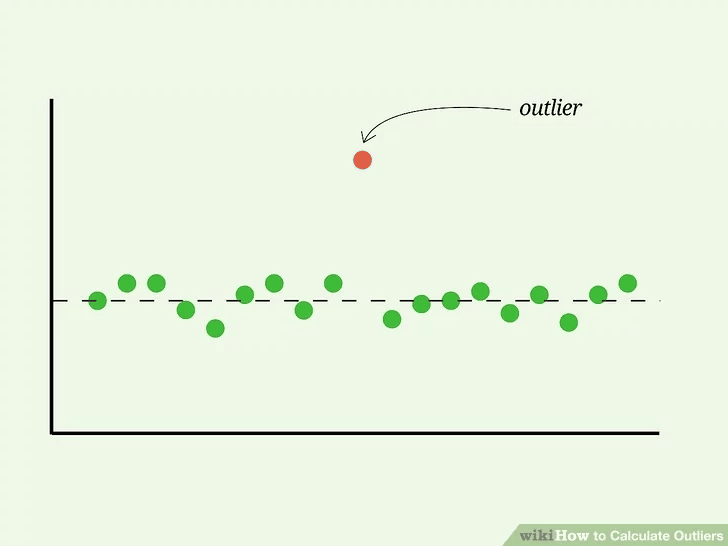
[from How to Calculate Outliers at WikiHow]
Let’s apply this mathematical concept to the real world.
You work for an HR product company, and your main users are HR and Operations people. You should invest a lot of research and energy into understanding these two main personas. But sometimes, a user like an intern pops in and uses your tool surprisingly.
An intern-like persona is the perfect outlier persona. They’re underserved and use the tool with a different lens entirely. Imagine that complicated onboarding flow through the eyes of an intern! Playing the wildcard persona can help your team see where you aren’t advocating for the right people.
How to do it: Research and create a user persona for an under-served yet lucrative user type. This “outlier persona” doesn’t have to drive all your decisions but can certainly improve a few. Use it as a spark for brainstorming out-of-the-box ideas or when colleagues are too focused on the mainstream.
2. Use pattern libraries that go against the status quo.
Too often, we fall into the same tired, boring patterns at work.
Sometimes, things get political because people can’t imagine a better way. Why not use creativity to bring novel patterns to dispel the old politics?
Pattern libraries don’t have to be based on existing code. A pattern library can be a mood board where you catalog emerging design patterns. You can gather inspiration in a messy Figjam board with screenshots of interesting approaches that can be a constant source of inspiration.
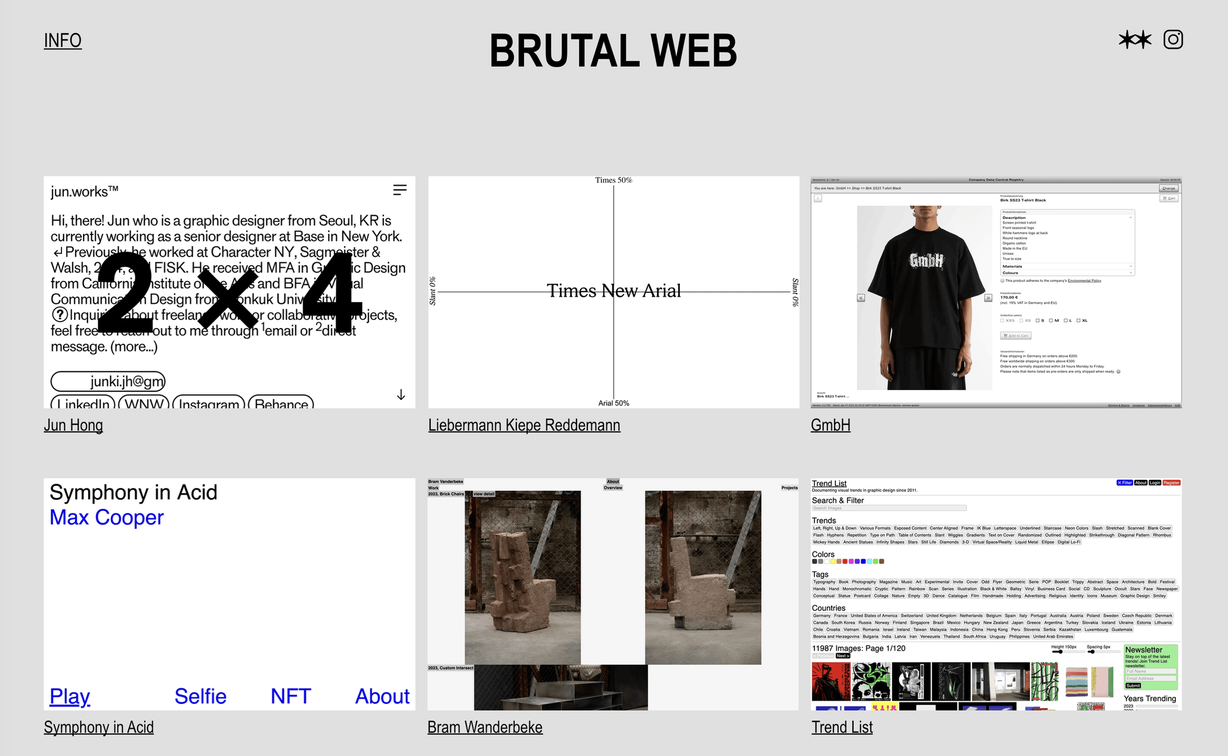
[Inspiration sites like Brutal Web can bring inspiration from the fringe]
You don’t have to be limited to UI patterns, either. Strategy, product, and user research are also worth incorporating.
For example, Paper created a pattern library for research. The library helps teams deal with difficult research situations in ethics and accessibility.
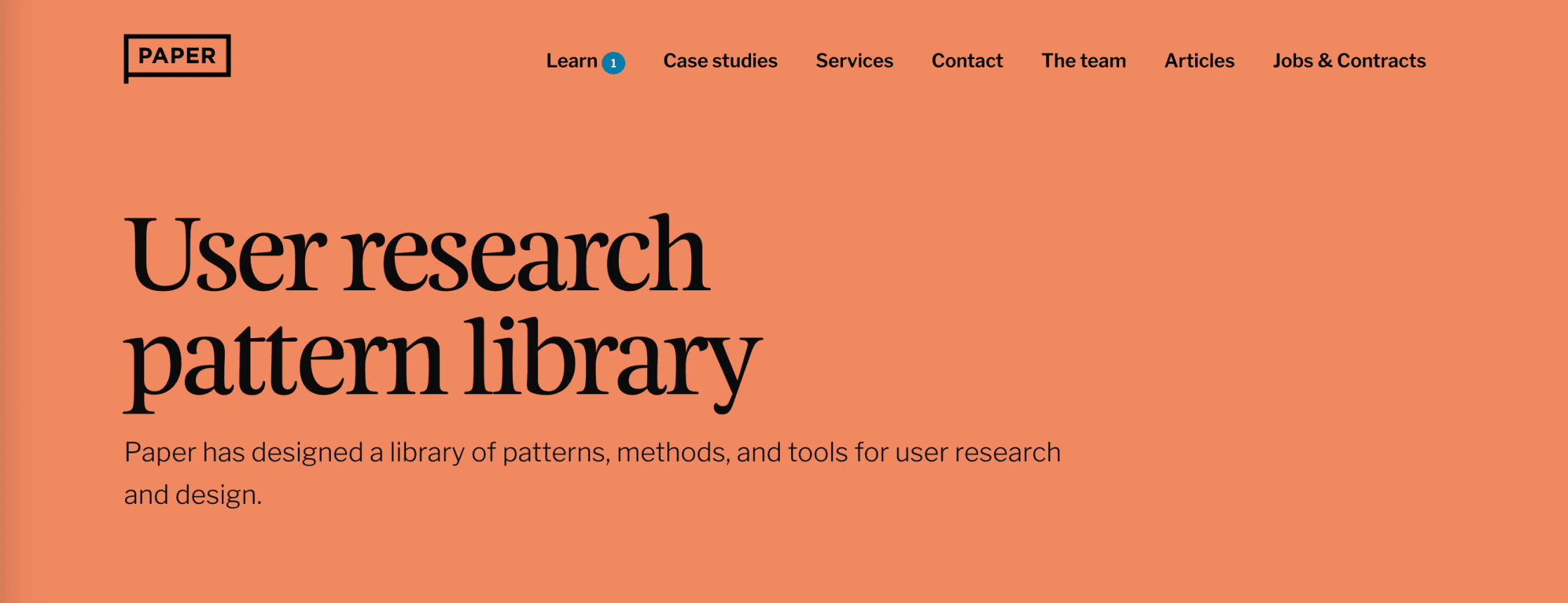
[from Paper’s User Research Pattern Library]
Sites like this are the perfect example of bringing awareness to a cause through design.
Activists are known for challenging accepted beliefs. In the same way, designers can challenge accepted beliefs by finding new design patterns to make the company more unique, an excellent way to carve out a strategic niche.
How to do it: Run a monthly team workshop where everyone brings a new design pattern to the meeting. Keep this pattern research in a shared Figjam board and bring it up whenever you’re stuck implementing a design.

How to design like a lobbyist
Okay, this one’s for all the realists. Here are 2 ways to run design like a lobbyist:
1. Use ZOPA for stakeholder negotiations.
Often, you will find yourself negotiating with decision-makers in a project. Like a lobbyist, you don’t have any real decision-making power, so the art of negotiation becomes important.
When you’re trying to get a design idea approved, you should be aware of the limits of that stakeholder. The “zone of possible agreement” is called the ZOPA.
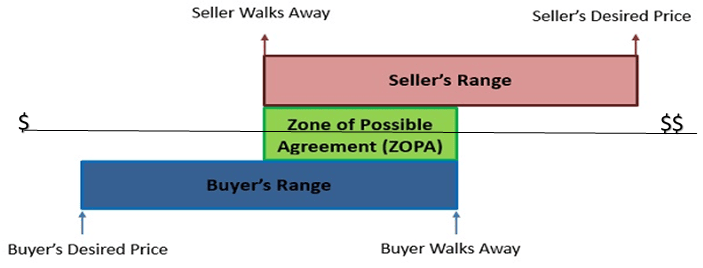
[from ZOPA on Wikipedia]
Let’s say you’re trying to get more time for research. Your manager may have a zone of time that they are willing to give you. But if you go outside of their zone, you may get shut down before you can negotiate. A little research can help you make an initial guess on your manager’s zone.
Once you’ve established a possible agreement zone, the negotiation can start. Negotiation might be the wrong approach if there is no zone of possible agreement.
How to do it: Negotiate a budget for your next project using the ZOPA approach (Zone of Possible Agreement). Look for the overlap between what you desire from the budget vs. what your manager is willing to offer.
2. Use insights to influence strategy.
Lobbyists push for new laws that will benefit their constituents. They present facts and ideas, hoping to inspire policy changes. Designers can do the same for company strategy by feeding research insights upward.
While most designers think of insights on a project basis, insights can be bigger than a single design. An insight can influence company strategy, with the right lobbying.
Imagine you were working on a project, and a user insight told you that your user journey involved multiple people. Until then, all of your product data was thought to be from a single user, but it turns out, there are several users involved. That’s exactly the kind of insight that can make its way into company strategy.
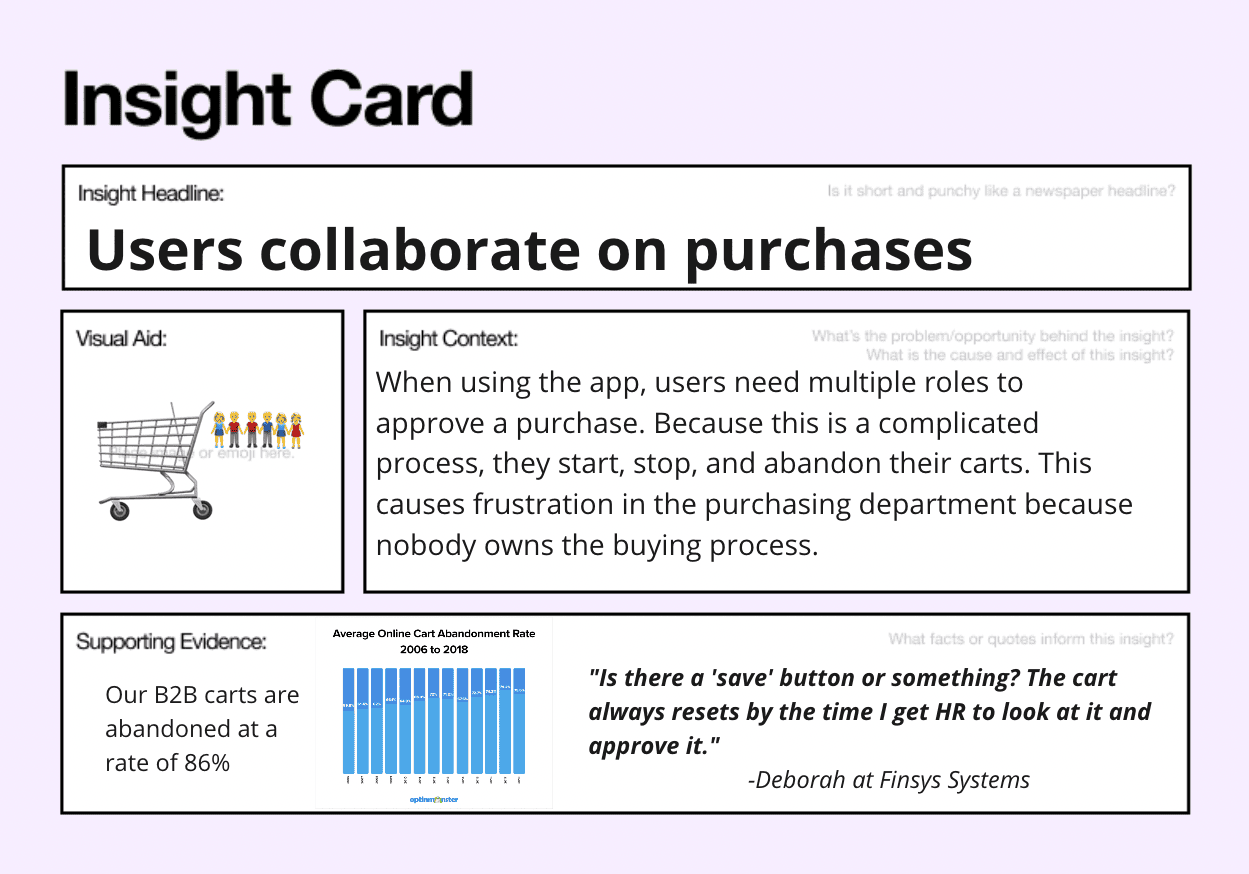
[Example of the Insight Card, a free tool for writing better insights by Jeff Humble]
Example from the Insight Card by Jeff Humble
You’ll need to research and iterate on insights before they’re ready for the strategy level. For a high-risk insight like that, you better be a pro at writing insights (use this insight guide + template I made). You want to be confident in your insight before campaigning for it to influence strategy.
How to do it: From customer and competitor research, start a list of the top 3 user insights that can be company-changing. Make a slide for the best insight, including the evidence and a visual. Ask leadership how you might get this insight into the company strategy. Listen to their advice and keep campaigning!
Winning Politics in UX
In summary, when dealing with politics in UX design, you can draw inspiration from the roles of activists and lobbyists.
Designing like an activist
- Use “outlier personas” to drive advocacy
- Use pattern libraries that go against the status quo
Designing like a lobbyist
- Use ZOPA for stakeholder negotiations
- Use insights to influence strategy
Design is already an amalgamation of many professions, so don’t be afraid to borrow something from politics.
You might find yourself riding the success of a winning campaign to the boardroom.