
Why Company-First Strategies Fail (And How Customer-First Wins)

I want you to picture a strategy. What do you see?
You probably pictured a giant PowerPoint presentation filled with graphs, corporate diagrams, the latest buzzwords, and lofty company goals. What you probably don’t picture is the person who should be at the center of that strategy: the customer.
When designing strategies, many companies prioritize internal goals (revenue, growth, beating competitors) over customer goals. This might initially seem intuitive at first since strategies are designed for and executed by employees and are not meant to be shared with customers.
Why might it be a problem when the customer isn’t considered first?
Over-focusing on company interests can result in a company-first strategy that barely considers the customer’s perspective. This can lead to one of the biggest risks in strategy: your customers don’t align with your myopic vision.
While a company-first approach can undoubtedly yield short-term gains like engagement and sales, these short-term gains often come at the expense of long-term gains such as retention and loyalty. We will examine many examples of this.
A good strategy includes a healthy mix of company and customer considerations. However, customers are so often neglected that a customer-first strategy seems like a radical idea. In this article, I will argue for a customer-first strategy so that strategy can become more balanced in favor of the customer.
Let’s compare company-first failures with customer-first successes to give some practical takeaways for founders and business leaders.
1.) Chasing Competitors Instead of Customer Needs
One of the biggest mistakes with company-first strategies is thinking you can win by trying to beat the competitors at their own game. As you will see, you would be much better off with a customer-first strategy.
Company-First Failure: Google+ (2011-2019)
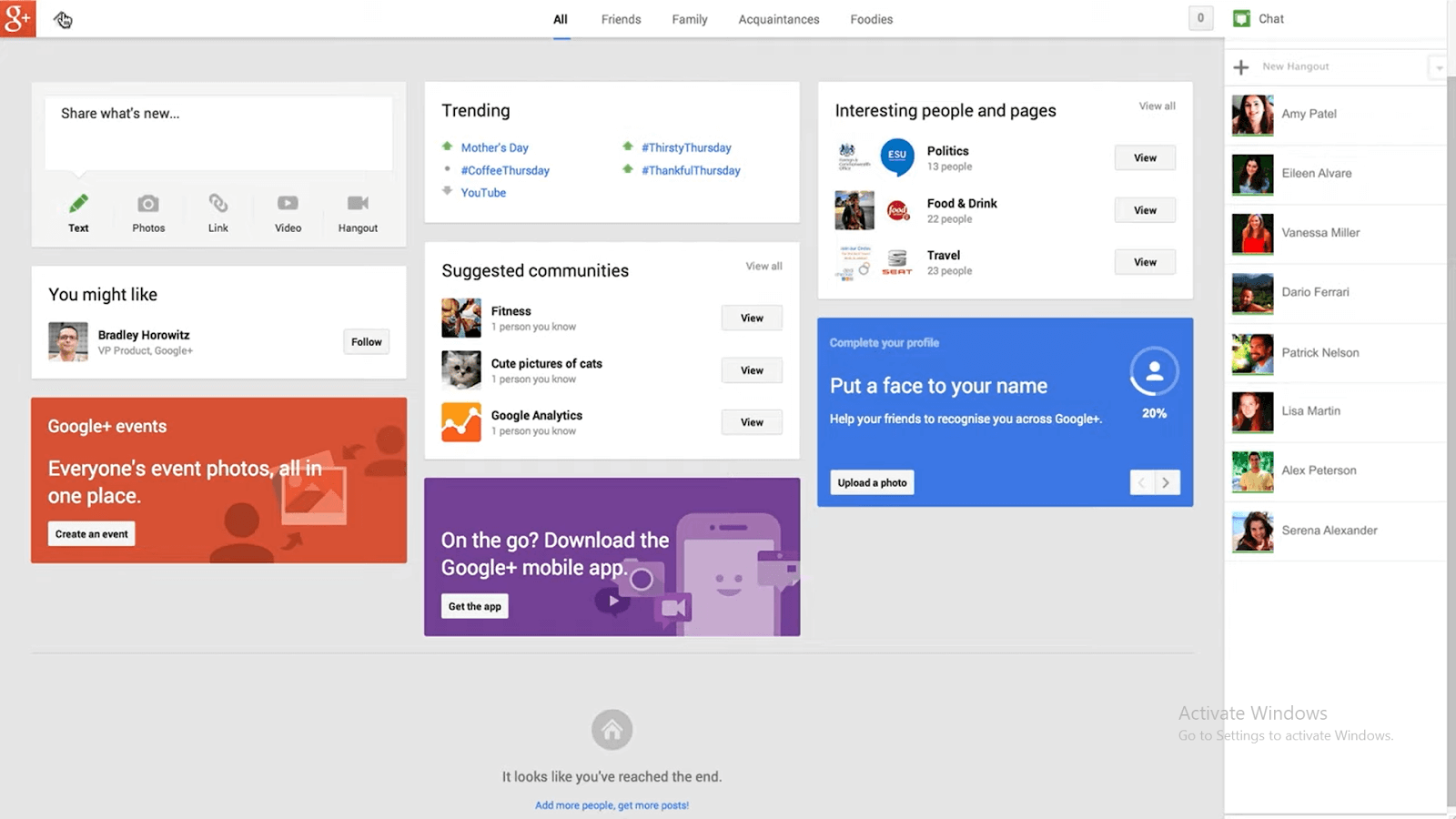
Google+ was a social network meant to compete with the startling growth of Facebook in the early 2010s. Like companies are prone to do, Google looked at the success of a product and thought they could do better. Google’s ubiquitous product suite meant they could manufacture some real growth by linking to the product.
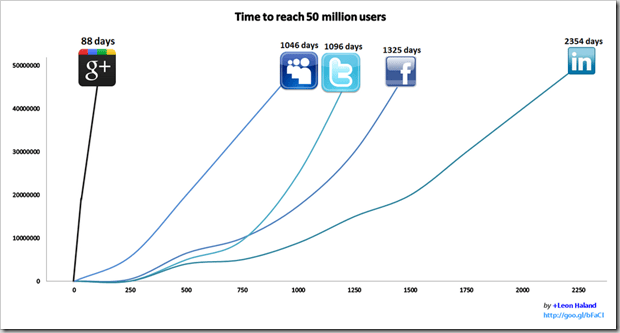
[a graph of Google’s record-setting 88 days to 50 million users]
Showcasing their lack of customer perspective, Google pushed the tool hard, even forcing users to create a Google+ account to comment on YouTube, hoping to get short-term growth in customer adoption.
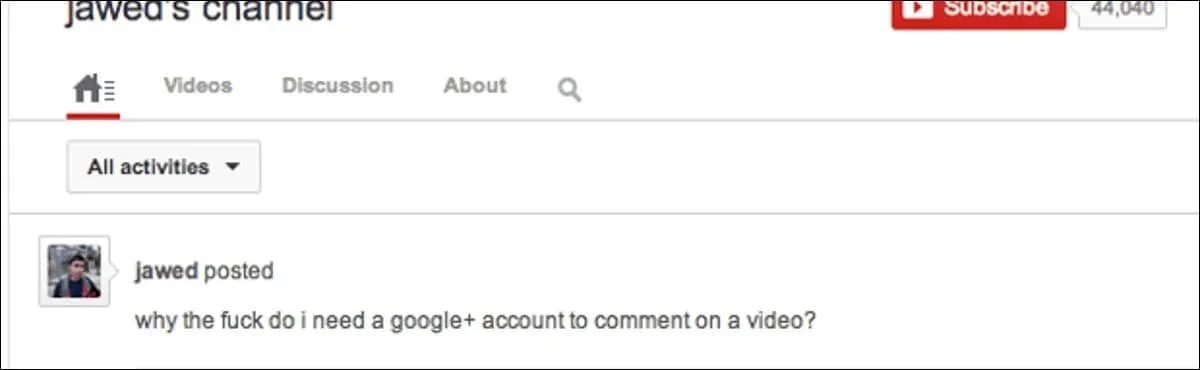
[a comment on Google+’s invasive growth strategy]
Google+ started on the defensive and never caught up to Facebook or Twitter. There were some short-term gains, but they never turned into long-term success. By 2015, Google+ had 2.2B users, but only 9% posted content publicly—most accounts were inactive. (source: Business Insider)
Many of the original team behind Google+ have since come out with the real story. Chris Messina, one of the UX designers behind the project (and inventor of the hashtag) bemoans the lack of customer perspective in his Medium post about the project:
“What’s going on with Google+? Where is it headed? What the fuck is it for, anyway?… To this day, I still don’t know what Google+ is for, let alone better at than Facebook. Some might argue it’s “cleaner” and has fewer ads, but even those won’t be lasting competitive advantages.”
It wasn’t just the designers who had negative things to say. Steve Yegge, an engineer at Google, summarized the failings of Google+ perfectly in a Gizmodo article:
“Google+ is a knee-jerk reaction, a study in short-term thinking, predicated on the incorrect notion that Facebook is successful because they built a great product.”
If only those short-term company goals could have been balanced with a differentiated long-term vision for the customer. Google+ is a textbook example of ignoring the customer perspective while pursuing a company-first strategy.
Let Google+ be a cautionary tale to those trying to beat the competition at their own game like Google tried to do with Facebook.
Even with Google’s immense budget and software prowess, they failed. If Google couldn’t do it at the height of their game, your company certainly can’t do it.
Customer-First Success: Slack (2013-Present)
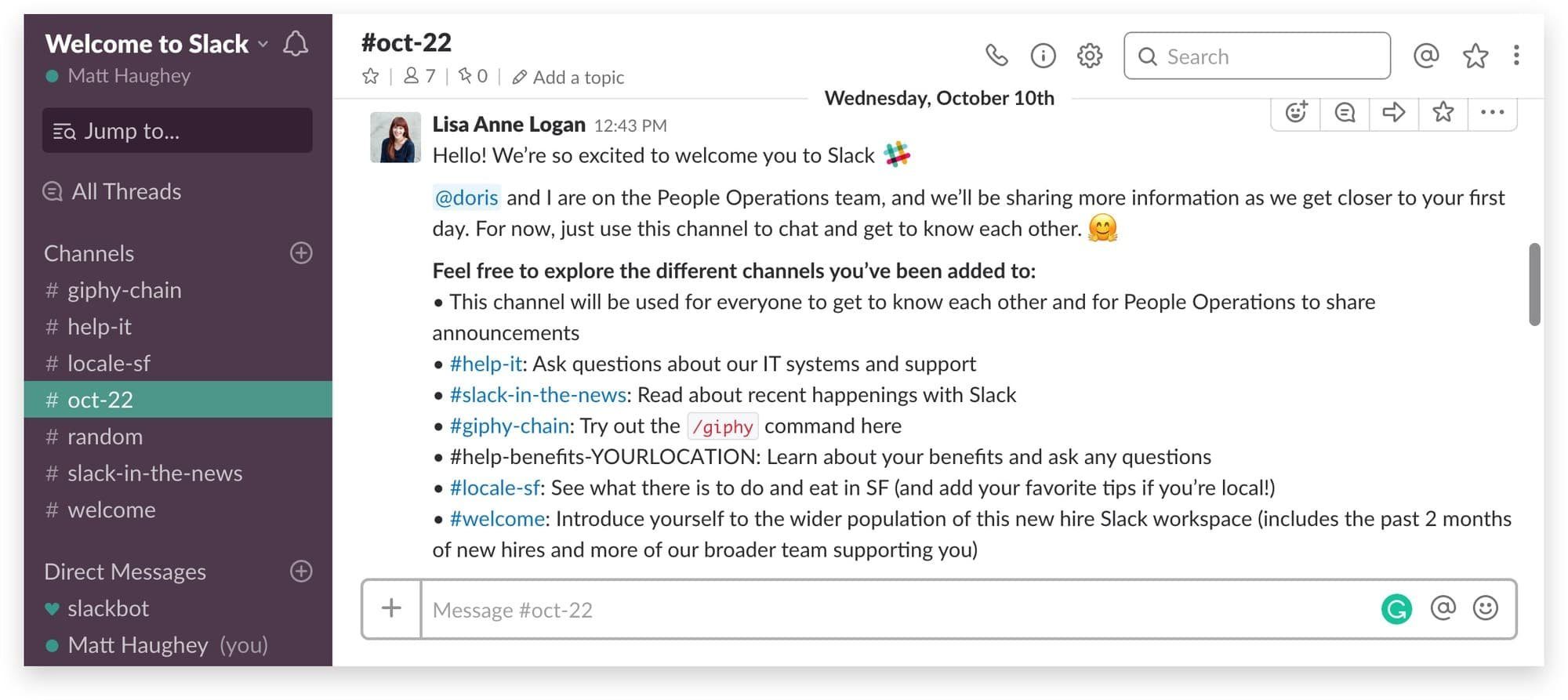
Rather than copying the competitors, Slack created a whole new category of workplace communication by listening to its users.
You may be so used to Slack that you forgot what communication was like at work before Slack. It was endless email threads, blah design, static, and fewer emojis…more boring.
One doesn’t often think of enterprise communication software going viral, but that’s precisely what Slack did with its customer-first strategy of Slack which feels more like a social game than a working app.
When Slack launched in 2013, email and workplace chat apps like HipChat already existed. Instead of positioning Slack as just another chat tool, the team focused on a deeper customer need: reducing workplace friction and improving collaboration.
Developed initially as a chat-based game, Slack evolved its user experience into an almost addictive approach to communication. With its colorful visual design, responsiveness, and GIPHY integration, users loved using the tool. And they quickly forgot about email.
They purposefully differentiated their product from email tools because they heard customer frustrations with email. Users wanted modern interactions and hated trying to find things in email threads.
Even though they had early success, they didn’t launch with a rigid roadmap. Slack built its product based on continuous user feedback from early adopters, including teams at Rdio and GREE. Some key user-driven features included:
- Powerful search & archives (users wanted to find past conversations easily)
- Integrations with tools like Trello, Google Drive, and GitHub (users don’t have to leave Slack to get stuff done)
- Custom emoji & reactions (customers wanted ways to express tone quickly)
The thing is, Slack did end up attaining a lot of growth. This continuous customer feedback cycle did wonders for Slack’s growth.
Maybe they didn’t grow as fast as Google+, but they certainly achieved long-term growth.
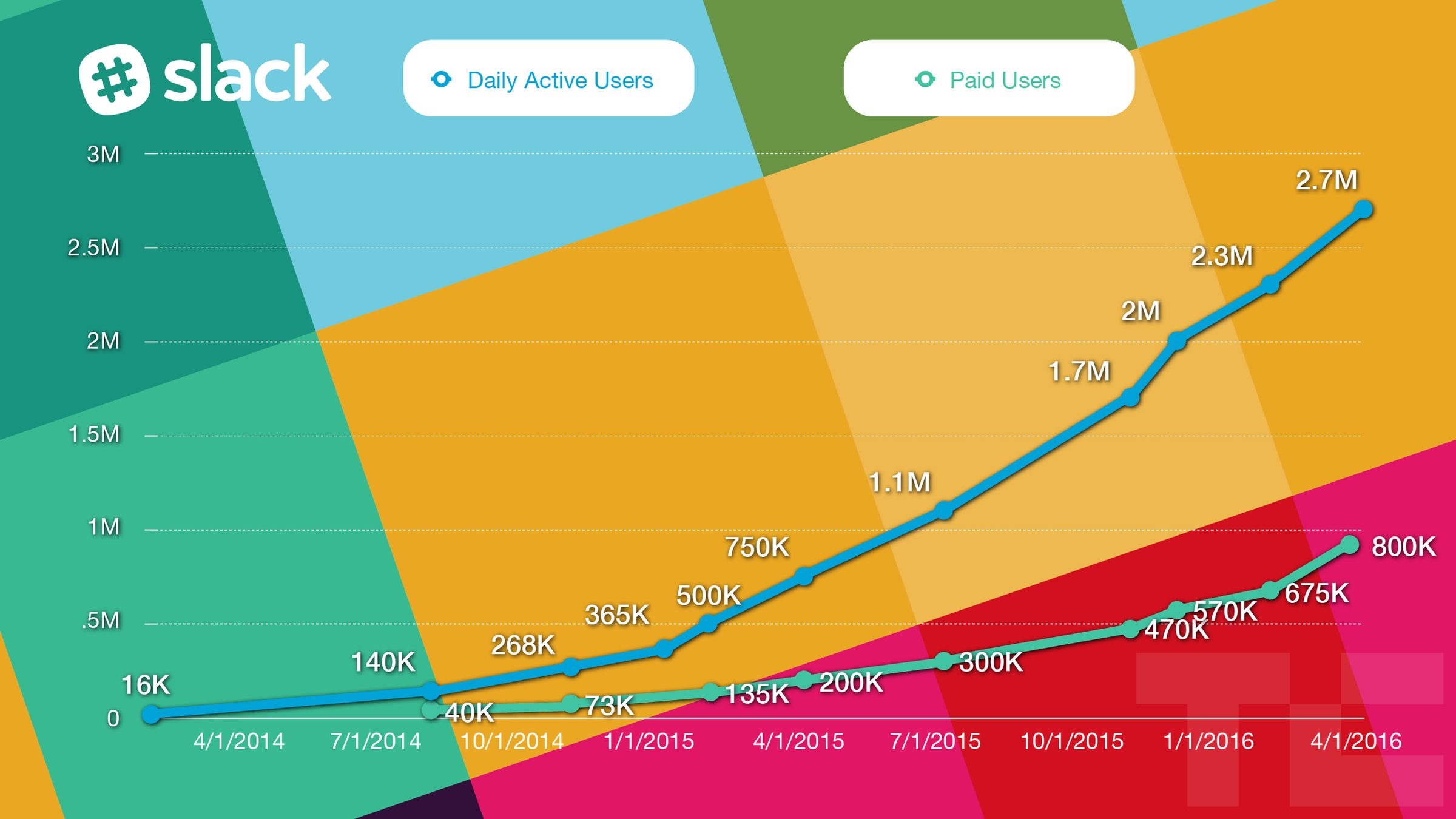
[a breakdown of Slack’g growth from TechCrunch]
This continuous customer feedback cycle did wonders for Slack’s growth. Slack grew from 0 to 2M daily active users and 570k paid users in less than two years, primarily through organic team adoptionrather than paid marketing. (Source: TechCrunch)
Slack’s vision and customer focus can be seen in how the CEO Stewart Butterfield talks about the app’s customer-first vision:
“Slack wasn’t just chat. It reduced our reliance on email, made work more async, and created a sense of presence.”
Slack’s commitment to a customer-first strategy has helped it define a new category of work communication in a very profitable way by monetizing the viral nature of their product.
Takeaway: Long-term growth isn’t about copying competitors—it’s about finding and solving a problem they haven’t addressed.
2.) Prioritizing Hype Over Real Customer Demand
Why do the most hyped products so often crash the hardest?
Many over-hyped products, like Juicero and Theranos, have failed spectacularly. Even hype masters like Apple have had failures with over-hyped products like the Apple Vision Pro. Events like the Fyre Festival or pump-and-dump crypto schemes have taught us to be wary of hype.
Hype is elevated expectations fueled by emotion and marketing.
For successful launches, hype can take you from artificial to actual customer demand, and for failed launches, the hype doesn’t survive the customer’s contact with the product.
Today, I want to tell you a quick story about how two companies handled customer demand.
One took a hype-based approach, trying to create demand, while the other achieved slow demand (and ultimately a fair amount of organic hype) through user insights.
Manufacturing customer demand with hype will only get you so far. Check out some examples of how hype turned into failure with these examples of company vs. customer-centric strategies.
Company-First Failure: Quibi (2020)
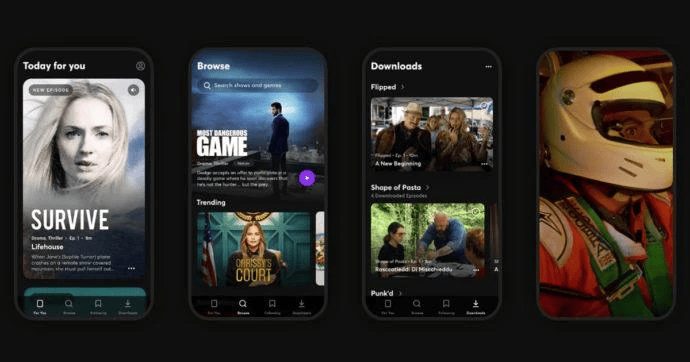
On its surface, Quibi made perfect sense to investors in 2020. The idea was Hollywood-quality ten-minute movies and shows designed for younger audiences that consume media primarily on their phones.
Quibi managed to raise $1.75B on this assumption, promising to revolutionize how we consume media on our phones. Led by a Hollywood executive, there was a long line of big-name producers waiting to make content for the app’s Gen-Z users.
Despite tons of advertising, including a Super Bowl ad, Quibi couldn’t live up to the hype. Ninety days after launch, Quibi lost 92% of its early users despite spending $1.75B on content and marketing. (Source: CNBC) Shortly after, the company declared bankruptcy.
Why did it fail? Once again, Quibi could not answer, “Why do I need this?” Its poor value proposition didn’t outcompete its customers’ default: TikTok and YouTube. The app charged $5 a month for mediocre content that couldn’t compete in quality with the user-generated content of social media. (Source: The Verge)
While the initial assumption that customers wanted high-quality content in short form on their phones was correct, Quibi failed to see that their competition wasn’t Netflix; it was free apps like TikTok and YouTube.
Quibi teaches us that understanding a little about your customer isn’t enough. You have to understand the customer’s perspective, particularly about your idea.
Will your customers choose you over the myriad of options at their fingertips? Do you even know which options your customers are considering? Not knowing the answers to these questions can be fatal to a new company.
Quibi got so hung up on its perceived sources of strength, like hype and content deals, that it neglected to check the strategy with the greatest source of strength a company can have: the customer.
Customer-First Success: Duolingo (2011-Present)

Duolingo is one of the most successful freemium apps of all time, and more than half a billion people have tried the app at some point. Even the mascot, Duo, has 16 million followers on TikTok.
Anyone who has ever taken a language course and failed knows that learning a language can be a very frustrating experience. Duolingo has changed how the world learns by asking, “What if learning a language could be as fun as playing a game on your phone?”
Duolingo has remained one of the top education apps in the Apple app store for over a decade. Even though the company offers the app for free, it is valued at over $19 billion! (source: Stock Analysis)
The key to Duolingo’s success lies in a unique customer insight: the biggest barrier to learning language isn’t difficulty; it’s motivation. People don’t quit because learning is hard. They quit because it’s boring, overwhelming, or not giving them results.
Only 10% of people who start learning a language actually stick with it. (Source: Duolingo) Persistence is the secret to learning a language, and persistence can be improved by helping customers with habit formation using features like streaks and leaderboards.
To put it in product terms, retention is key to user success in language apps*.* And unlike other games and apps on your smartphone, customers really want this habit.
Duolingo’s strategy is to make a habit-forming language app by mastering these areas:
- Behavioral psychology (so the users’ learning environment is built to form habits)
- Gamification (so users stay hooked with game elements like streaks & leaderboards)
- Effortless education (so users don’t give up early)
- Freemium pricing model (so every user has the chance to get hooked)
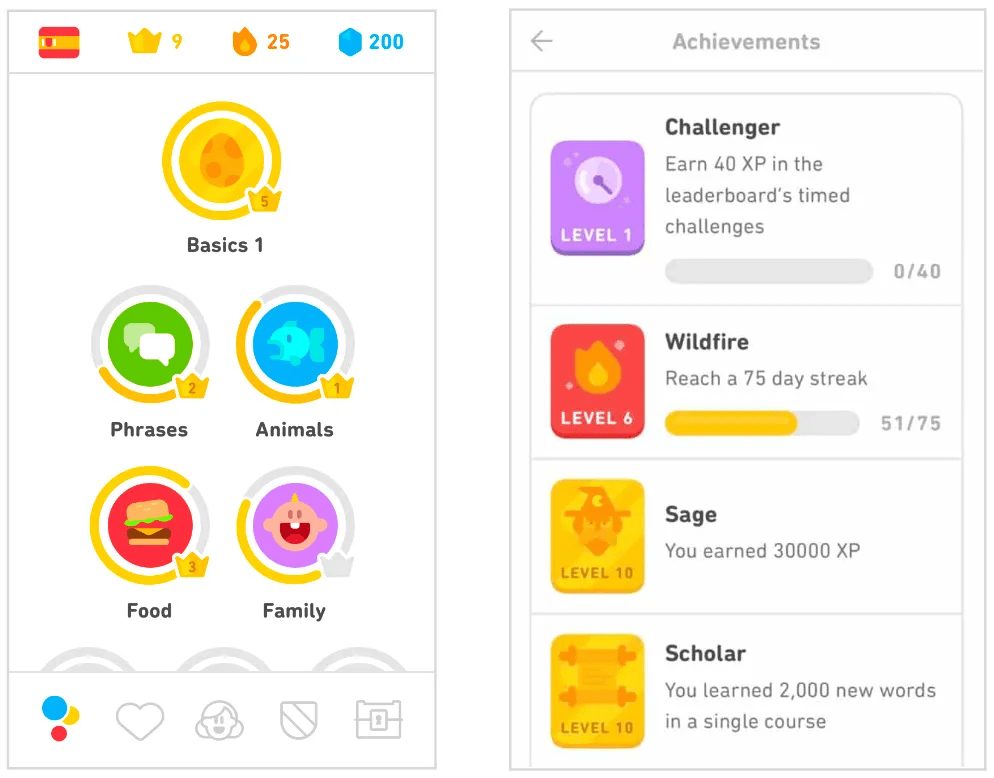
[some of Duolingo’s early gamification features]
While the app’s colorful design and cartoony feel can make it seem simple, behind the cute owl animations is a culture of continuous experimentation and AI driving their customer-focused features. Hundreds of tests are being run at any given time, and customers shape how the app develops through their behavior. (source: Unboxify)
The result is undeniable. Duolingo has over 500m users with 74M monthly active users and is the #1 education app globally, driven by gamification. Duolingo made $137.5M in revenue in a single quarter of 2023. (source: Duolingo)
Instead of assuming how people wanted to learn languages, Duolingo focused on habit formation.
Gamification (streaks, leaderboards) made learning addictive and suited real user behavior.
Thanks to its giant user base and continuous experimentation, Duolingo can uncover data-driven customer insights that no competitor can hope to keep up with. This commitment to a customer-first strategy has helped them dominate the category of language apps for over a decade.

If you want to learn how to create a strategy like Duolingo that focuses on customer insights, check out my free strategy canvas. It’s a great tool for building strategies around insights.
You don’t need a viral PR stunt to generate customer demand. You can do it by getting back to the basics of understanding your customers.
And don’t even think about touching the hype machine until you know why customers will prefer you over the many options they already have.
It’s clear that hype can’t replace insight, and no amount of buzz will save a product nobody needs.
Takeaway: Hype doesn’t create lasting customer value. Customer behavior, not marketing, should guide product strategy.
3.) Monetizing at the Cost of Customer Experience
Monetizing is almost always a company goal, but company-first strategies rarely consider how customers feel about those monetization efforts. Monetization doesn’t have to destroy the customer experience, as long as you have a strong customer focus, as we’ll see in these examples.
Company-First Failure: Yahoo’s Decline (1990s-2010s)
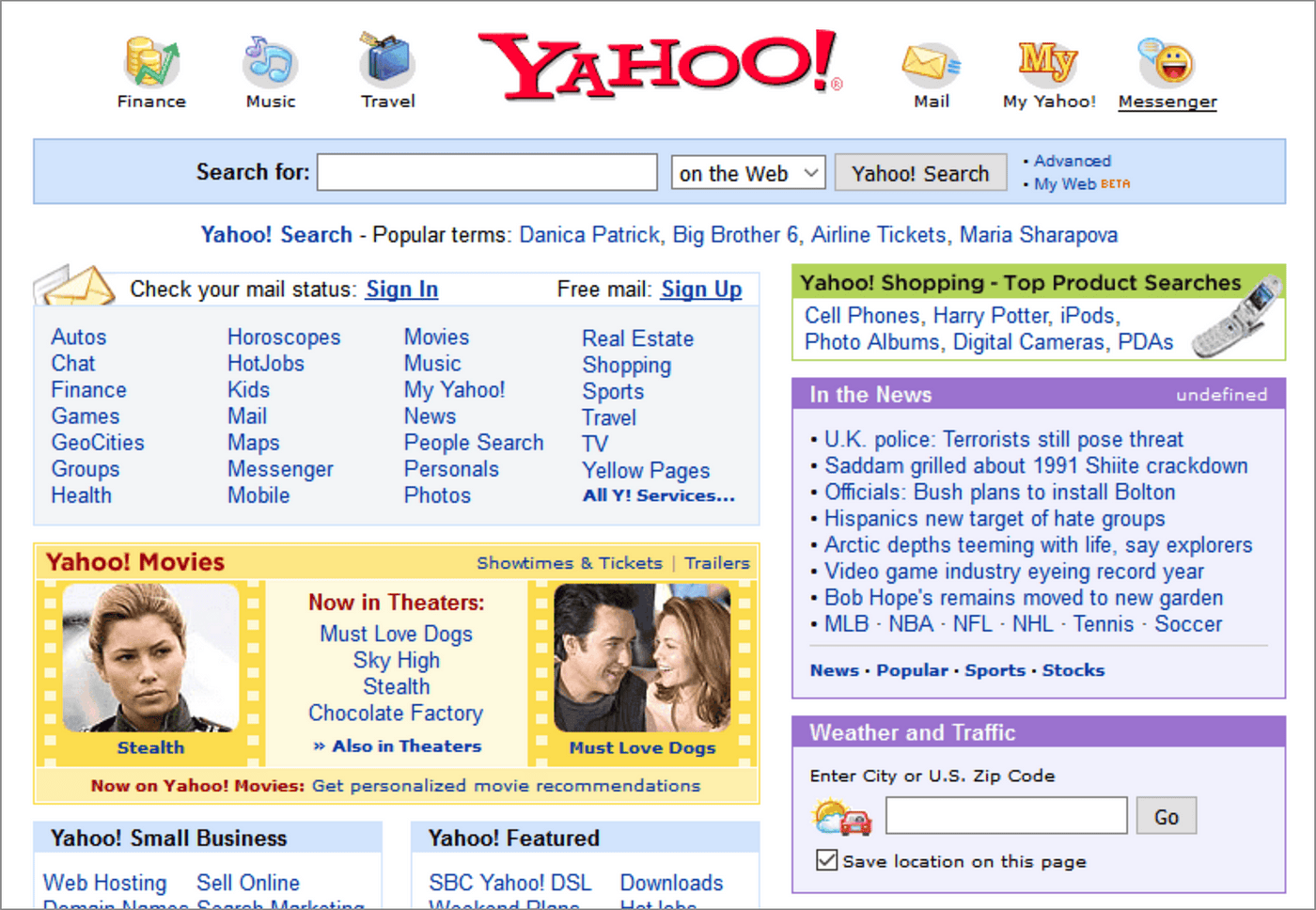
Yahoo used to be the tech darling of the internet much like Google or OpenAI is today.
The company had humble beginnings as a simple guide to the internet, but at its peak, Yahoo was worth over $100B in market value in 2000.

[Yahoo with the coveted Boardwalk position on the .com edition of Monopoly, 2000]
Fifteen years later, in 2015, Verizon bought them for a mere $4.83B, a hefty price but at a 95% discount from its high in 2000. How did it lose so much value?
Yahoo couldn’t evolve past its dotcom-era understanding of customer needs. To make up for their failing product, the company made 114 acquisitions. Even some winning acquisitions like Geocities and Alibaba weren’t enough to save the company’s financials. They tried multiple CEOs who did their best to develop a vision that could compete with companies like Google and Facebook, but they couldn’t keep up with the changing internet.
Google and Facebook realized consumer trends were going mobile in the early 2000s. Yahoo made almost no play in the mobile space until 2012, when CEO Marissa Mayer took over. By then, it was too late to bring Yahoo’s cluttered offerings into the “smartphone era” which had already been building up for five years with the iPhone’s debut in 2007. (source: HBR)
By 2015, this lack of vision meant Yahoo’s interface had an ad-heavy, cluttered approach, while Google’s slick interface was cleaner and worked better. Yahoo missed two opportunities to buy Google for $1M in 1998 and $5B in 2002. Today, Google is worth over $500B. (source: Yahoo)
Yahoo’s inability to understand consumer trends or form a cohesive user-centric vision prevented it from making the right strategic moves, ultimately costing them $95B in lost market share.
Customer-First Success: Superhuman (2019-Present)
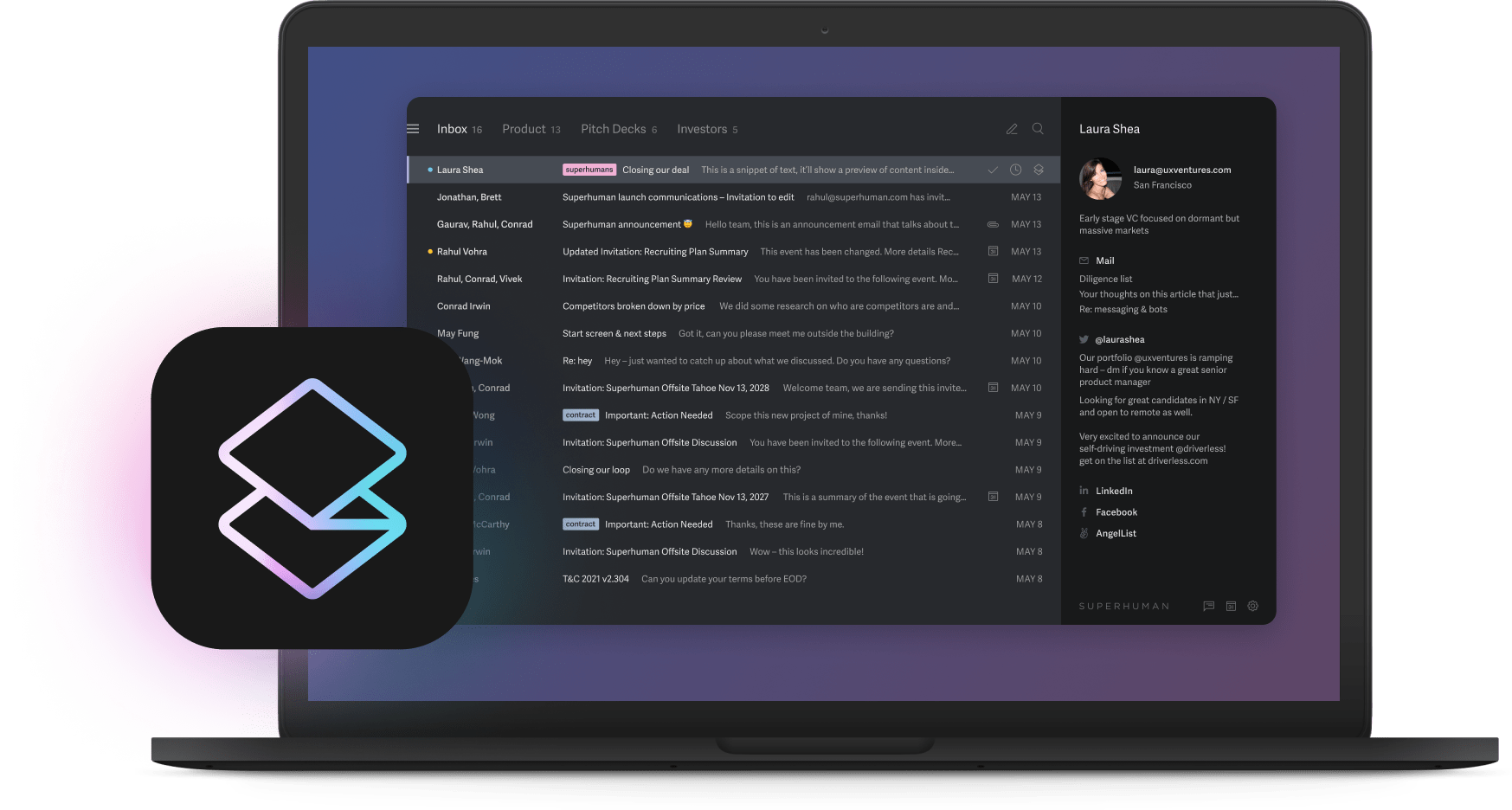
Superhuman is a powerful email app aimed at making work emails more productive. The company claims to save you four hours weekly while improving response times by two days. Everything about the app is built for pro-level business customers who need an edge, like salespeople.
Superhuman uses a variety of approaches to achieve pro-level email:
- Built around speed (so users can answer more emails faster)
- Intuitive user experience (so users get snappy interactions and a keyboard-only UX)
- Rigorously-tested AI features (so users can automate their emails and save more time)
- User-led growth (so users that like the product can easily become superfans)
Rather than monetizing with ads like Gmail, Superhuman prioritizes a slick, distraction-free user interface without adsto separate themselves from the competition. They aim to make every interaction on the app less than 100 milliseconds so that the experience feels magical. They also have a 30-minute, extensive onboarding to teach customers how to use their keyboard shortcuts for a mouse-free user experience.
It seems to work because Superhuman allegedly has 50k paying users at $30/month. While that might sound expensive for regular email users, their pro-level customer focus means companies like Notion, Dropbox, and Spotify count among their users. It seems to be working, as they hit $36.5M in revenue in 2024. (source: GetLatka)
Takeaway: Monetization should enhance the user experience, not disrupt it.
How You Can Shift to a Customer-First Strategy
If you haven’t picked up on the secret by now, it’s all about focusing on the customer before all else (If you work in a B2B or agency setting, you can replace the “customer” with the “client”).
You will need to switch up your processes and break out of the thinking that strategy only comes from business goals and business thinking.
Here are some ways to build customer-first thinking into your strategy processes:
1.) Validate the customer needs in your strategy before scaling or raising more money
Many founders wrongfully assume that success is only about building a great product, so they scale and raise money before validating their product with customers.
Walking back an idea once you’ve secured funding can be painful. You can save yourself a ton of heartache by checking your concept with the customer before you commit to the idea.
How to do it:
- Test something small: Start with an M.V.E. (minimum viable experiment) and test the idea with your target audience
- Talk to customers: Run interviews, surveys, and collect feedback from real users
- Look for viral growth: Check that users return organically and without incentives
2.) Focus on customer pain points, not just trends
What problem is this the solution to? It’s a question every founder should ask themselves.
Many founders chase hot new trends like web3 or AI without a clear customer problem behind it. While using trends might help you raise venture capital, you won’t get real traction unless you solve customer needs.
How to do it:
- Zoom out: Ask yourself, “Will this pain point still be valid in five years?”
- Problem-first: Build around customer needs, then choose the right tech…not the other way around
- Uncover hacks: Find customers who are already hacking together solutions to the problem
3.) Focus on long-term customer value, not short-term hype
Hype shouldn’t be anybody’s full-time job.
Founders can sometimes spend too much time searching for funding, press, and viral growth while neglecting the basics like retention. If you only care about user acquisition, you won’t be ready to keep those users when the hype dies down (and it always does).
How to do it:
- Track retention: Daily active users (DAU) matter more than signups in the long run
- Encourage habits: Give users a habit-forming reason to keep coming back
- Continuously iterate: Never stop evolving and applying what you learn about customers
Hire Jeff to Design a Customer-First Strategy
Are you interested in building lasting customer-first thinking at your company? Jeff can be your customer-first strategy consultant.
What other ways have you found to build customer-first thinking at your company?
Let me know in the comments!